


CT STORM REPORT | JULY 4, 2026
The Storm Is Temporary. Your Roofing Company Shouldn't Be.
Connecticut homeowners choose us for honest inspections, insurance expertise, award-winning workmanship, and service that lasts long after the job is complete.
 CT Licensed & Insured
- A+ BBB Rating
- 350 Google reviews · 5.0 overall rating
- Workmanship & Products Guaranteed
- Family Owned & Operated


Recent Storm Date: July 4th, 2026
CT Storm Location(s): BRISTOL, TERRYVILLE, PLAINVILLE, NEW BRITAIN, PLYMOUTH, HARTFORD COUNTY, LITCHFIELD COUNTY
Hail Size: 3" HAIL (baseball)
Wind Speed: 80+ MPH
Impacted Households: 70,000+
Questions about a claim?Contact your insurer promptly. Deadlines depend on your policy and applicable rules.
Warranty Availability:
Owens Corning Platinum Warranty
GAF Golden Pledge Warranty
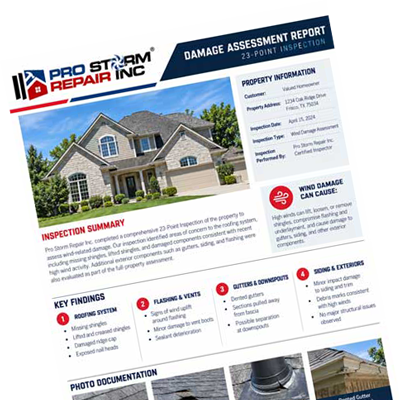
23-POINT EXTERIOR HOME
DAMAGE INSPECTION
WITH PHOTO REPORT
Your 23-point visual inspection covers:
We document visible conditions in safely accessible areas. Your photo report identifies what we checked, any findings, and areas that need a closer look or a return visit.
- Missing, cracked, curling or wind-lifted shingles and loosened roofing materials.
- Visible hail impacts and granule loss on shingles.
- Punctures, debris impacts and other visible storm damage to the roof surface.
- Ridge cap shingles for damage, displacement or missing sections.
- Underlayment where it is already exposed and visible.
- Nail pops, exposed fasteners and loose roof attachments.
- Visible sagging or uneven areas of the roof surface.
- Roof valleys for debris, damage and visible drainage concerns.
- Visible flashing and seals around chimneys, walls, vents and skylights for gaps, rust or deterioration.
- Roof vents and exterior ventilation openings for visible damage, obstructions or installation concerns.
- Visible damage near eaves or roof edges associated with ice damming.
- Moss, algae or lichen growth on the roof surface.
- Drip edges for loose, damaged or missing sections.
- Gutters for visible damage, loose sections, debris and drainage concerns.
- Downspouts and visible discharge paths for damage, loose connections or obstructions.
- Soffits and fascia for visible deterioration, storm damage or detachment.
- Front-facing siding and wall cladding for visible impacts, cracks, holes or loose and missing pieces.
- Right-side siding and wall cladding, viewed from the street, for visible damage or loose and missing pieces.
- Rear-facing siding and wall cladding for visible impacts, cracks, holes or loose and missing pieces.
- Left-side siding and wall cladding, viewed from the street, for visible damage or loose and missing pieces.
- Visible exterior trim and siding transitions around windows and doors for storm damage, gaps or deteriorated sealant.
- Leak concerns reported by the homeowner and related visible exterior signs.
- Summary of roof, siding and exterior findings, inspection limits and recommended next steps.
Concealed materials, interior spaces, and structural engineering assessments are outside this exterior inspection. We record inaccessible or inapplicable items clearly; we do not mark them as inspected.
Q. Can hail damage be invisible from the ground?
A. Absolutely. Many hail impacts leave bruising beneath the surface of asphalt shingles without immediately breaking them. Granule loss, fractured shingle mats, loosened seal strips, damaged flashing, and dents on soft metal components are often only visible during a close roof inspection. Even if your roof appears normal from the driveway, hidden hail damage can shorten its lifespan and eventually lead to water intrusion.
Q. If I live near Bristol but didn't see hail, should I still have my roof inspected?
A. Yes. Large hail often falls in narrow swaths, meaning one neighborhood may receive significant hail while another just a few blocks away sees only heavy rain. Wind can also damage shingles without visible hail. Missing granules, bruised shingles, lifted tabs, damaged flashing, dented gutters, and cracked siding are all signs that may not be visible from the ground. A professional inspection can identify hidden damage before it leads to leaks or insurance claim complications.
Q. Did the July 4, 2026 hail storm affect Hartford and Litchfield Counties?
A. Yes. Severe thunderstorms moved across Connecticut on the evening of July 4, 2026, producing damaging hail, strong winds, heavy rain, and widespread tree damage. Bristol experienced hail reports as large as 3 inches in diameter, while Terryville reported golf-ball-sized hail and Plainville reported half-dollar-sized hail. Wind damage was also reported throughout Hartford and Litchfield Counties. Even if your neighborhood was not specifically listed in official storm reports, your property may still have experienced hail or wind damage because severe storms often produce highly localized damage paths.
Q. Which Connecticut towns were hit hardest by the July 4 storm?
A. Based on preliminary storm reports, some of the most heavily affected communities included Bristol, Terryville, Plainville, New Britain, Torrington, Burlington, Southington, New Milford, Wallingford, Ridgefield, East Hampton, Brookfield, and North Lyme. Bristol received some of the largest reported hail in Connecticut, making surrounding neighborhoods especially important areas for homeowners to inspect their roofs, siding, gutters, and windows for storm damage.
Q. How soon should I inspect my roof after the July 4 Connecticut storm?
A. It's best to schedule an inspection as soon as it is safe after the storm. Early inspections help document damage while evidence is fresh and before weather exposure worsens the condition. Waiting several months can make it more difficult to distinguish storm damage from normal wear and may complicate the insurance claims process. Prompt inspections also allow small issues to be repaired before they become costly leaks.
Q. Does homeowners insurance usually cover damage from the July 4 Connecticut hail storm?
A. Most homeowners insurance policies cover sudden and accidental storm damage, including hail and wind, subject to your policy terms and deductible. Every insurance company and policy is different, so coverage depends on factors such as the age and condition of your roof and the extent of the damage. A professional inspection can help document storm-related damage before you decide whether filing a claim is appropriate.
 CT
Connecticut State License
CT HIC #0652178

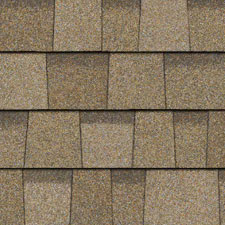
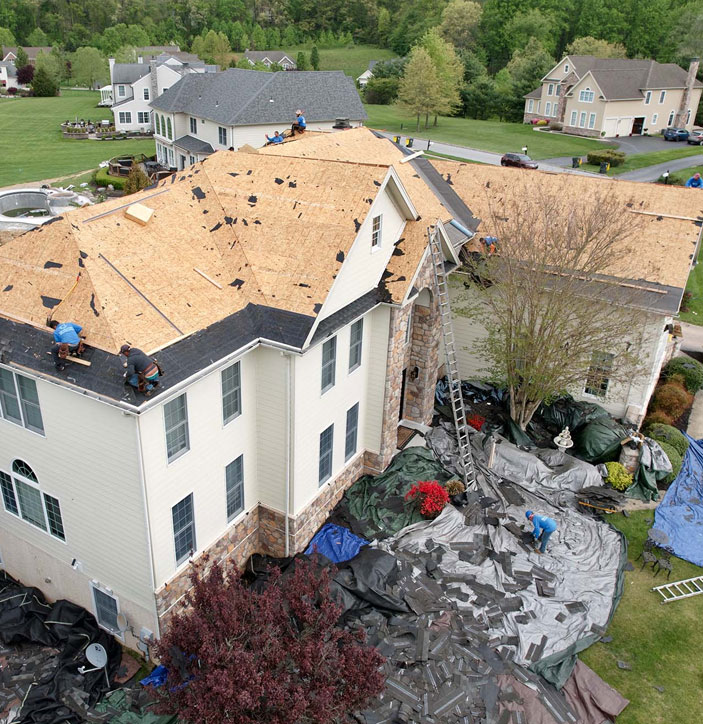
Recent CT Storm Repairs

 Siding Color:


 Siding Color:

 Siding Color:
 Siding Color: Siding Color:
 Siding Color: Siding Color: Siding Color:
 Siding Color: Siding Color: Siding Color: Siding Color: Siding Color:

Live Near Hartford County?

You may have Damage Too
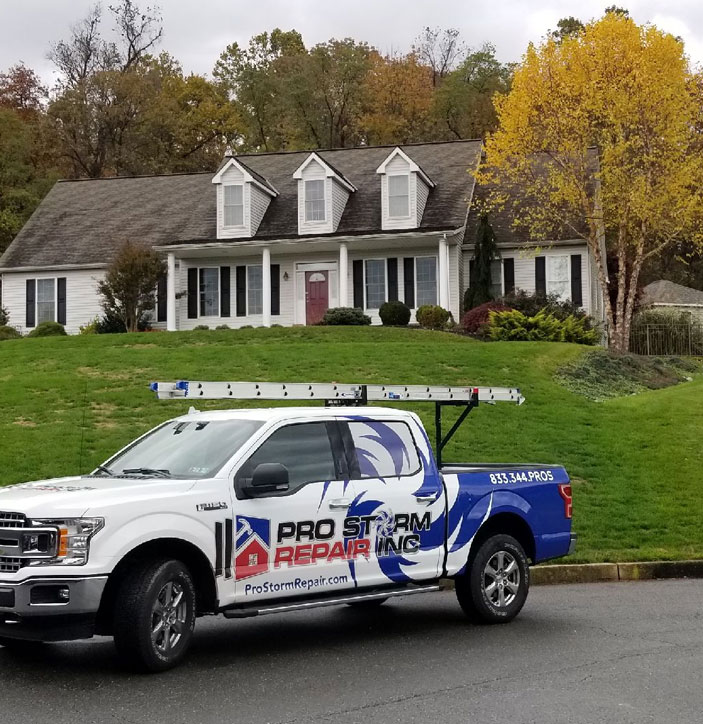
We're Certified Locals
CT License: CT HIC #0652178
We're Helping Your Neighbors
Don't Miss Out




On July 4, 2026, severe thunderstorms moved across Connecticut, bringing heavy rain, damaging winds, downed trees, power outages, and large hail to communities throughout the state. While several areas saw storm damage, Bristol and the surrounding Hartford County communities appear to have experienced the most significant hail impact, with reports of hail as large as 3 inches in diameter in Bristol. Hail of that size can cause serious damage to roofing shingles, siding, gutters, skylights, windows, and exterior surfaces.
Preliminary storm reports showed large hail in multiple Connecticut towns, including golf-ball-sized hail in Terryville, half-dollar-sized hail in Plainville, and golf-ball-sized hail in New Britain. Bristol stood out as the primary hail-damage area based on reported hail size, while nearby Hartford County communities also saw strong evidence of hail-producing storms. For homeowners, this type of hail damage is not always visible from the ground, but it can weaken shingles, knock away protective granules, crack siding, and create hidden roof problems that lead to leaks later.
The July 4th storm also caused widespread wind damage across Connecticut, with trees and wires reported down in communities including Torrington, Burlington, New Milford, Southington, Brookfield, Ridgefield, East Hampton, Bristol, Ansonia, and Wallingford. Litchfield County, especially Torrington and nearby areas, appeared to see some of the worst overall wind and tree damage, but Bristol remains the key hail-damage location based on the size of the hail reported. If your home was in the path of this storm, contact Pro Storm Repair at prostormrepair.com for immediate hail damage inspection and repair before minor damage turns into a costly problem.
Request your free, no-obligation storm damage assessment now!

Certified Connecticut Storm Repair Contractors
